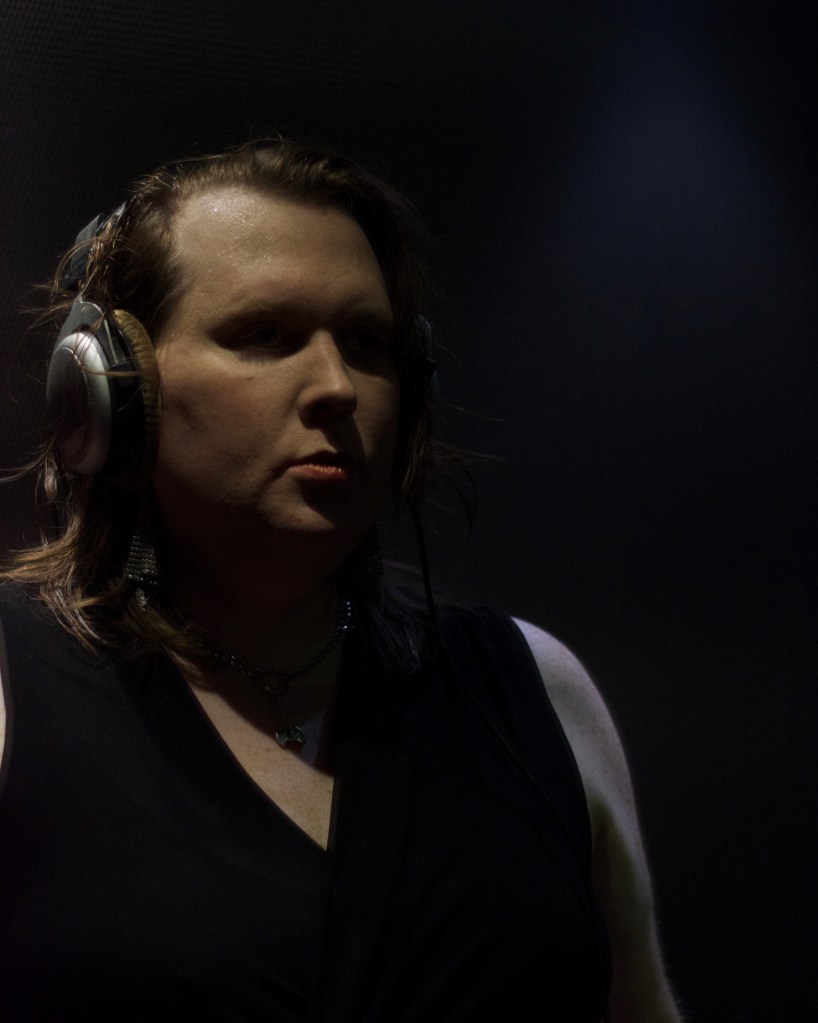
MJ O’Neill’s Employment Quest
Documenting The Job-Seeking Efforts of a (Genius, Superhuman) Disabled + Autistic Transgender Woman Survivor in 2026
ABOUT ME + MY QUEST + THIS SITE
I am trying to find a job. However, I belong to a bunch of marginalised identities that make that process difficult. Looking at various studies and pieces of research, I’m 12x more likely to remain unemployed* than a typical job-seeker. I’ve been experimenting to try and beat these odds. Here, you’ll find my experiments and various resources to help me out.
*See ‘Quest Diary – 12 October 2026: YOUR COMPANY (YES YOURS) IS LYING ABOUT INCLUSIVE HIRING
“What measures will your organisation be taking around recruitment of diverse/marginalised candidates?”
There’s a frequently referenced idea that (cisgender) men will apply for a job where they meet 70% of the requirements — but women and other genders will only apply if they meet 100% of requirements. The conclusion many have taken from this is that women et al do not believe in themselves.
However, I think it’s worth considering that they actually have no substantive reason to believe their application will be considered fairly unless they are immaculately qualified. It’s not a question of the self-worth of the candidate. It’s a question of the trustworthiness of the organisation and their processes of recruitment.
Given what is documented about pay gaps, systemic imbalances, and unconscious biases, there is actually little reason for any marginalised person to trust in any given organisation or their recruitment processes. Arguably, there’s a great deal of evidence to suggest distrust is warranted.
So, rather than endlessly submitting resumes and cover letters and applications to a process that is, statistically, most likely to reject me for reasons wholly unrelated to aptitude or experience, I have decided to ask each organisation before I apply:
“What are you doing to prevent my resume falling prey to the almost-inescapable systemic vicissitudes of belonging to a disabled and autistic transgender woman?”
If you’re wondering what can be done, the Australian Public Service has an interesting initiative called Recruit Ability. It stipulates that any disabled candidate who meets the requirements of an advertised position is automatically progressed to the next stage of recruitment as default. I found that to be a very interesting idea to addressing these imbalances.
Hopefully, I’ll learn some more as I ask more organisations about their approaches.
There are very few people in the world who can tell you what it’s personally like applying for professional jobs as both
-an unqualified white man, and
-an exceptionally qualified trans woman.
But, I’m one of them.
As the former, I was hired for full-time regional and global roles with orgs valued between US$0.5-1.5 billion.
As the latter, I’ve had six job interviews in four years and been (temporarily) hired by two underfunded queer not-for-profits at minimum legal wage.
Of the 150+ companies I’ve applied for in that time, 100% claimed to value diversity and inclusion in their recruitment. They all asked for identity data in their application processes.
Here’s the statistics, though.
As a trans person, I’m four times as likely to be unemployed as a cisgender person.*
In fact, if I’m disabled (I am), I’m also twice as likely to be unemployed**.
And, if I’m autistic (I am), I’m also six times more likely to be unemployed***.
So, at an absolute minimum, I am 12x less likely to be hired than someone who isn’t trans, disabled and autistic.
So, while all these companies claim so vocally to be committed to equity and inclusion, their efforts are seemingly without any substantial impact on their hiring practices. And, more than anything else, that is what kills me.
All of these companies will acknowledge these imbalances exist — but none of them will take any substantial responsibility for the existence of those imbalances. Because, they treat unfair decisions as something that other companies do. They’ll never acknowledge that the trends exist because *they* are part of it.
It’s not an accident. It’s not some other company that’s keeping me unemployed and encouraging me to apply because they really value diverse applicants. It’s yours. These imbalances exist because your company doesn’t think they actually matter enough to take action. Your company doesn’t want to say that. It doesn’t sound good to say ‘it’s not that important’. But, that is demonstrably your position.
You know how I know? Because, you keep asking me to fix it. I keep seeing application processes that say – ‘if you need any accommodations to make your application, let us know’. I keep seeing ‘even if you don’t fit all the criteria, apply’. Your company keeps excluding people like me and, somehow, you think that it’s my actions as an applicant that’ll change the outcome.
Why? Because, you don’t actually think you’ve done anything wrong. You think you always hired the best person for the job. You don’t really care about the abundance of evidence that shows you probably never did. You just don’t want to be criticised. So, you’re ‘inclusive’.
I just wish you’d stop pretending.
*https://www.transresearch.org.au/reports/employment-26
**https://www.aihw.gov.au/reports/disability/people-with-disability-in-australia/contents/employment/unemployment
***https://www.abs.gov.au/articles/autism-australia-2022
THE MJ O’NEILL SUPPORT SYSTEM
If you want to support me with a regular donation, you can sign up below to regularly donate just 1% or 0.1% of your weekly, monthly, or yearly income. Or, you can make a one-off donation (of any amount) here.
Join The MJ O’Neill Support System
With lots of little donations, a community can make a massive difference. All donations below are derived from 1% (or 0.1%) of each income bracket discussed in this article. Each link will take you to a checkout to set up your donation plan. Or, you can make a one-off donation (of any amount) here.
Weekly Micro-Donations
Micro-Donation I ($1.10/week)
Micro-Donation II ($2.30/week)
Micro-Donation III ($3.40/week)
Micro-Donation IV ($5.10/week)
Weekly Donations
Low Income ($8/week)
Part Time Income ($11/week)
Full Time Income ($17/week)
Median Income ($23/week)
High Income ($28/week)
Very High Income ($34/week)
Monthly Donations
Low Income ($35/month)
Part Time Income ($51/month)
Full Time Income ($75/month)
Median Income ($100/month)
High Income ($125/month)
Very High Income ($150/month)
Annual Donations
Low Income ($420/year)
Part Time Income ($620/year)
Full Time Income ($900/year)
Median Income ($1200/year)
High Income ($1500/year)
Very High Income ($1800/year)
Each donation will come with a monthly email update on how donations are being used to support my wellbeing and help me support others.

